What Is an Aromatherapy Diffuser
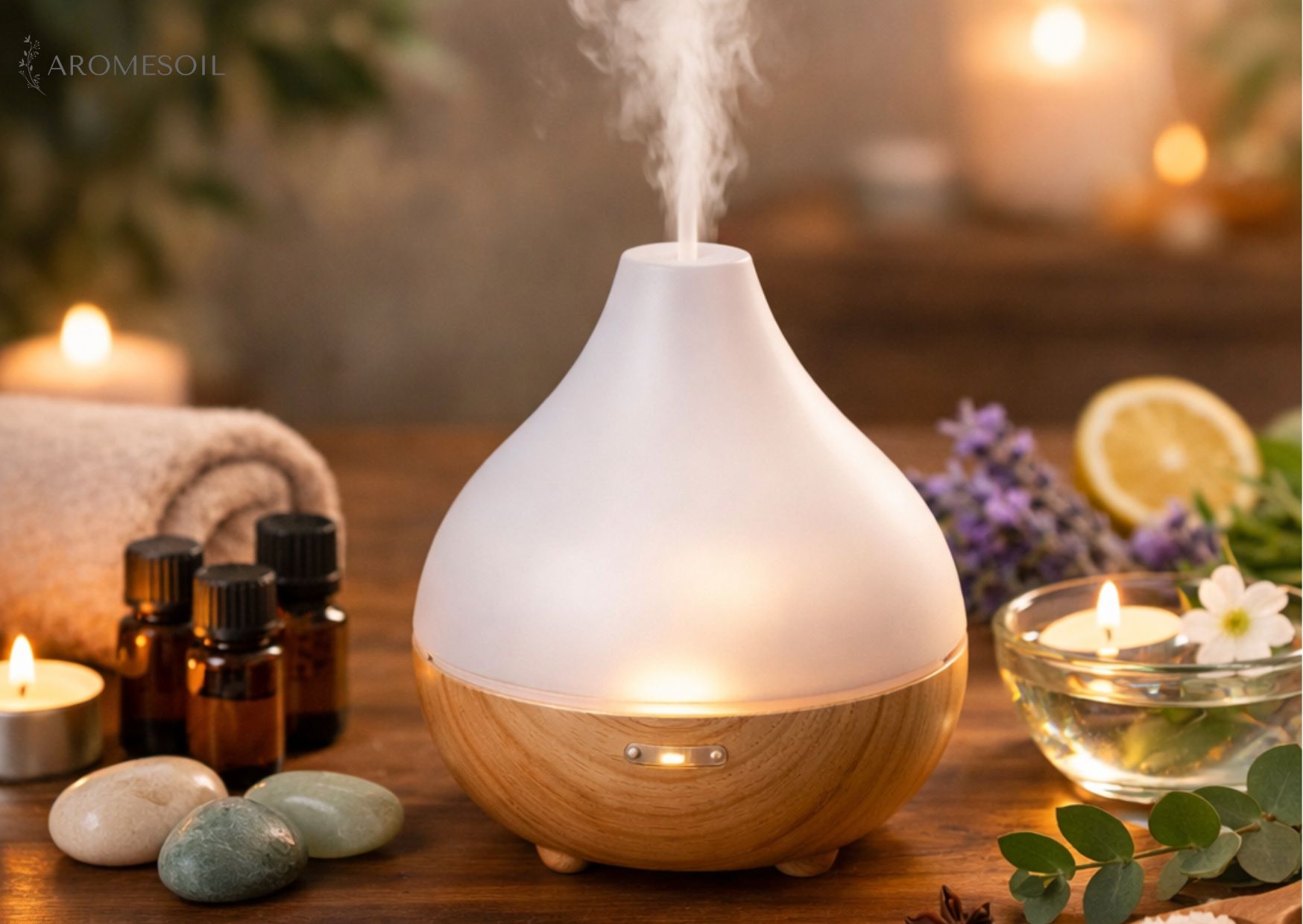
An aromatherapy diffuser is a device designed to disperse essential oils into the air, allowing their aroma to gently scent a space. Diffusers are commonly used for home fragrance, relaxation rituals, and general wellness environments. They are not intended to diagnose, treat, cure, or prevent any disease.
How Do Essential Oil Diffusers Work?
Essential oil diffusers break essential oils into micro-particles and release them into the air. Depending on the diffuser type, this process may involve:
- Ultrasonic vibration (water-based mist)
- Nebulization (oil-only diffusion)
- Evaporation (fan-assisted airflow)
- Heat (gentle warming, not recommended for all oils)
The goal is even aroma distribution while maintaining proper ventilation and safe concentration levels.
How to Use an Aromatherapy Diffuser Step by Step
Using an aromatherapy diffuser correctly helps ensure optimal scent diffusion and safe use.
Choose the Right Placement and Ventilation
- Place the diffuser on a flat, stable surface
- Keep it away from direct sunlight, heat sources, and electronics
- Ensure good airflow; avoid small, enclosed spaces
- Keep out of reach of children and pets
Fill the Water Tank Correctly
- Use clean, room-temperature water
- Do not exceed the maximum fill line
- Never operate an ultrasonic diffuser without water
Add Essential Oils the Right Way
- Use pure essential oils intended for diffusion
- Typical guideline: 3–5 drops per 100 ml of water
- Do not mix with carrier oils or synthetic fragrance oils unless specified by the manufacturer
Choose a Diffusion Mode
Many diffusers offer intermittent or continuous modes. Intermittent diffusion is generally preferred for maintaining a balanced aroma without overexposure.
How Long to Diffuse (and When to Stop)
- Recommended session: 15–30 minutes
- Allow breaks between sessions
- Stop diffusion if the aroma feels overwhelming or irritating
After-Use Routine
- Turn off and unplug the diffuser
- Empty remaining water
- Wipe the tank with a soft cloth
- Clean weekly with diluted vinegar or per manufacturer instructions
Tips for Best Results
- Use fresh oils within their shelf life
- Match oil intensity to room size
- Rotate scents to avoid scent fatigue
- Always follow manufacturer and label directions
Benefits of Aromatherapy Diffusers
When used responsibly, aromatherapy diffusers may support:
- A pleasant home fragrance experience
- Relaxing or uplifting ambiance
- Enhanced self-care routines
- A more enjoyable indoor environment
These benefits relate to sensory enjoyment and atmosphere enhancement, not medical or therapeutic outcomes.
Create Your Own Essential Oil Blends for Diffusing
Blending oils allows you to personalize your aromatic experience.
Basic blend structure:
- Top note (light, fresh): citrus oils
- Middle note (balancing): floral or herbal oils
- Base note (grounding): woody oils
Example blend (for aroma only):
- 3 drops sweet orange
- 2 drops lavender
- 1 drop cedarwood
Always diffuse blends in moderation and test aroma strength gradually.
FAQ About Aromatherapy Diffuser Use
How Long Should You Run a Diffuser?
Most users find 15–30 minutes per session sufficient. Continuous diffusion for extended periods is not recommended.
How Many Drops of Oil Should You Put in an Oil Diffuser?
A general guideline is 3–5 drops per 100 ml of water, depending on room size and oil intensity.
How Do You Make Diffusers Smell Stronger?
- Increase oil drops slightly (within safe limits)
- Use oils known for strong aroma profiles
- Ensure the diffuser is clean
- Reduce room ventilation temporarily
Do You Just Put Water in a Diffuser?
Ultrasonic diffusers require water plus essential oils. Nebulizing diffusers use oils only. Always follow the device instructions.
What Oils Should Not Be Diffused?
Avoid diffusing oils that:
- Are past expiration
- Are known to cause irritation
- Are not labeled for aromatherapy use
- Are contraindicated for pets or children
Examples may include certain strong or sensitizing oils when used improperly.
Is It Safe to Breathe in Essential Oils from a Diffuser?
When used as directed, in well-ventilated areas and for limited durations, diffusion is generally considered safe for aroma use. Individuals with sensitivities, asthma, or allergies should consult a qualified professional before use.
Explore Essential Oils for Diffusing with Aromesoil
Aromesoil offers a curated selection of essential oils designed for aromatic enjoyment and home fragrance use. All products are labeled according to cosmetic and consumer safety guidelines, with clear usage instructions and safety information.