Floral water vs hydrosol is a common source of confusion in cosmetic formulation.
Both terms are often used for water-based botanical ingredients, but they do not always refer to the same type of product.
For brands, formulators, and ingredient buyers, the difference matters because it affects label accuracy, formulation value, quality expectations, and supplier transparency. This guide explains how to compare both terms and what to check before choosing floral water for your products.
Are floral water and hydrosol the same?
Not always. While the two terms are often used as if they mean the same thing, they do not necessarily refer to the same type of ingredient.
- A hydrosol is generally the aromatic water obtained during the steam distillation of a botanical material such as rose petals, lavender flowers, chamomile, or neroli blossoms.
During distillation, volatile aromatic molecules from the plant move with the steam, condense, and separate into two phases: essential oil and water.
The water phase is the hydrosol. Because of this process, a hydrosol is considered a direct distillation by-product or co-product of the plant.
- A floral water, on the other hand, can mean different things depending on the supplier or manufacturer.
In some cases, floral water is simply another name for a hydrosol.
In other cases, it refers to water that has been blended with essential oils, natural aromatic isolates, extracts, solubilizers, preservatives, or fragrance ingredients to create a flower-scented water.
This is why the floral water vs hydrosol discussion matters so much. A product labeled “rose floral water” may be a genuine rose hydrosol or it may be purified water with added rose fragrance components. Without reviewing the ingredient list, technical data, and manufacturing information, you cannot assume they are identical.
How is a hydrosol usually made?
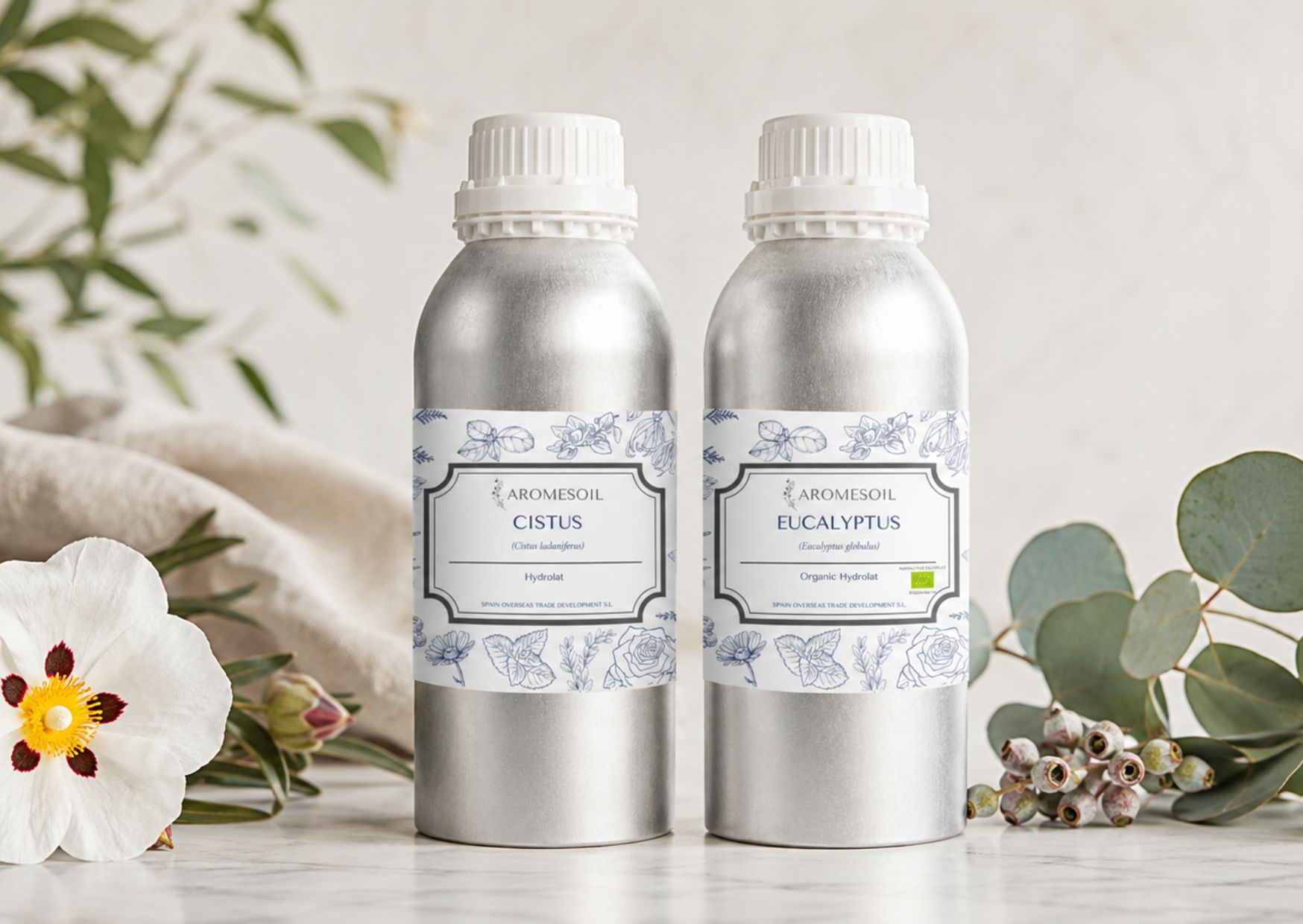
A hydrosol or hydrolatis usually produced through steam distillation or hydrodistillation of fresh or dried botanical material. This is the traditional process used to obtain many essential oils and aromatic waters.
In a typical distillation process:
- Plant material such as rose petals, lavender flowering tops, or orange blossoms is placed into a distillation vessel.
- Steam passes through the botanical material, carrying volatile aromatic compounds from the plant.
- The steam and aromatic molecules are cooled and condensed back into liquid.
- The condensed liquid separates into two parts: the essential oil phase and the water phase.
- The water phase, which contains water-soluble plant constituents and trace amounts of volatile aromatic compounds, is collected as the hydrosol.
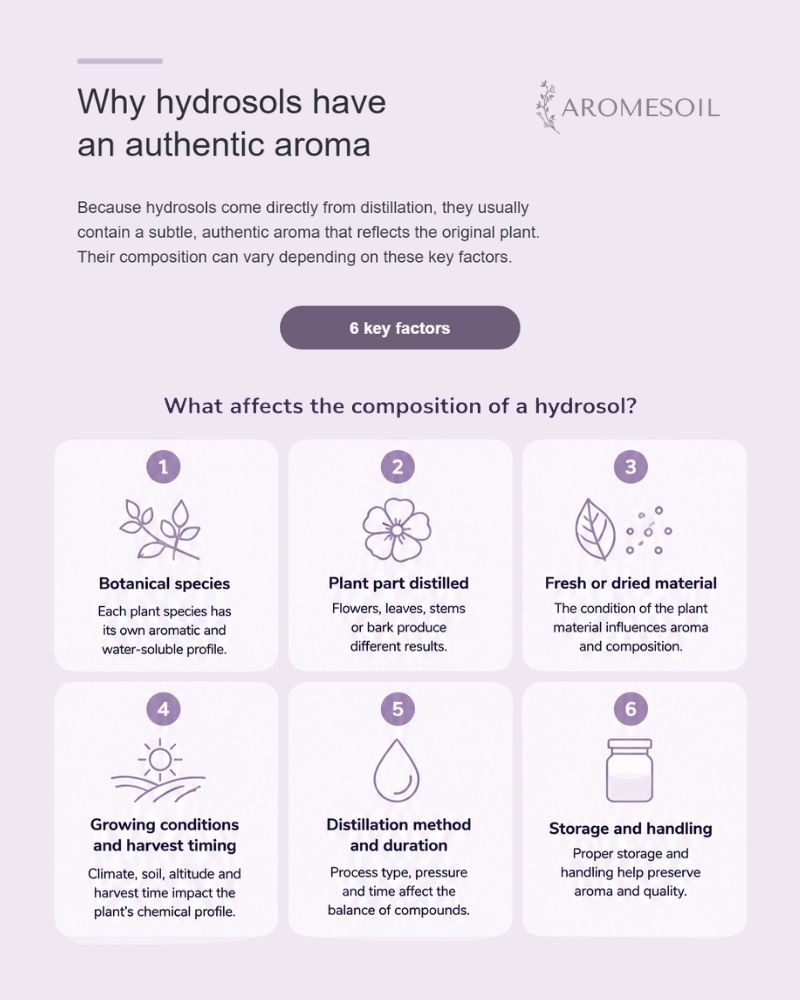
Because hydrosols come directly from distillation, they usually contain a subtle but authentic aroma that reflects the original plant. Their composition depends on factors such as:
- The botanical species used.
- The part of the plant distilled.
- Whether the material was fresh or dried.
- Growing conditions and harvest timing.
- The distillation method and duration.
- Storage and handling after production.
This means not all hydrosols are the same, even when they come from the same plant. For example, a rose hydrosol distilled from fresh Rosa damascena petals may smell and perform differently from another rose hydrosol made from a different rose variety, origin, or distillation process.
Maybe you can be interested in:
How is floral water usually made?
The term floral water can cover several types of products, which is why it is important to look beyond the front label.
In many commercial applications, floral water is made by combining water with one or more aromatic ingredients to create a botanical-scented liquid. Depending on the product and supplier, this may involve:
- Purified or deionized water.
- With essential oils.
- Natural aromatic compounds.
- Botanical extracts.
- Fragrance materials.
- Solubilizers or dispersing agents.
- Preservatives.
- Humectants or other cosmetic support ingredients.
For example, a “lavender floral water” may be made by dispersing a small amount of lavender essential oil or lavender fragrance in water with a solubilizer and preservative system. The final result can still be useful in cosmetic products, but it is not the same as a true distilled lavender hydrosol.
That does not automatically make floral water inferior. In fact, some floral waters are designed to offer stronger scent consistency, easier preservation, or better formulation flexibility.
The key point is that hydrosol vs floral water is about understanding what the ingredient actually is not assuming all floral waters are distilled hydrosols.
Floral water vs hydrosol comparison table
Below is a practical overview of the main differences between floral water vs hydrosol for cosmetic and personal care use.
| Comparison point | Hydrosol | Floral water |
|---|---|---|
| Production method | Usually obtained through steam distillation or hydrodistillation of botanical material. | May be a true distillate, or a formulated aromatic water made by blending water with aromatic ingredients. |
| Composition | Typically contains distilled plant water, water-soluble botanical compounds and trace aromatic molecules. | May contain water, essential oils, fragrance materials, extracts, solubilizers, preservatives or support ingredients. |
| Botanical source | Directly linked to a specific distilled plant source. | May or may not come directly from distilled flowers; the scent may come from added aromatic materials. |
| Added ingredients | Can be offered in its pure distilled form, although some commercial products may include preservatives. | More likely to include fragrance, solubilizers, preservatives or other formulation ingredients. |
| Aroma profile | Usually soft, fresh and delicate, with natural variation between batches. | Can be stronger, sweeter or more uniform if blended with fragrance or aromatic compounds. |
| Label terminology | The term should ideally refer to a distilled aromatic water from a specific botanical source. | The term is often broader and less precise, so the ingredient list should always be checked. |
| Best way to verify | Check the INCI name, botanical source and production method. | Check the full ingredient list, added fragrance, solubilizers and supplier documentation. |
Production method
A hydrosol is typically obtained through steam distillation or hydrodistillation of plant material. It is part of the direct distillation output.
A floral water may be:
- a true hydrosol sold under another name, or
- a water-based aromatic product made by blending water with essential oils, extracts, fragrance materials, or other cosmetic ingredients.
Ingredient composition
A hydrosol generally contains:
- distilled plant water
- naturally occurring water-soluble constituents from the botanical
- trace aromatic molecules carried over during distillation
A floral water may contain:
- water
- essential oils or aromatic compounds
- solubilizers
- preservatives
- botanical extracts
- additional support ingredients depending on the formula
Botanical source
- A hydrosol is directly tied to a distilled botanical source. If it is a rose hydrosol, it should come from the distillation of rose plant material.
- A floral water may or may not come directly from distilled flowers. Its scent profile may be derived from essential oils, fragrance blends, extracts, or a combination of aromatic ingredients.
Added fragrance or preservatives
- A true hydrosol may be offered in its pure distilled form, although some commercial products may still include a preservative system depending on packaging, shelf-life goals, and intended cosmetic use.
- A floral water is more likely to include added fragrance ingredients, solubilizers, and preservatives because it may be a formulated aromatic water rather than a direct distillate.
Aroma profile
- A hydrosol usually has a softer, fresher, and more delicate aroma than the corresponding essential oil. The scent can be nuanced and may vary naturally from batch to batch.
- A floral water may have a more uniform or stronger fragrance profile if it has been blended with aromatic materials. This can be helpful for products where scent consistency is a priority.
Label terminology
This is one of the most important areas in the floral water vs hydrosol conversation.
If a product is called a hydrosol, it should ideally correspond to a distilled aromatic water obtained from a specific botanical source.
If a product is labeled floral water, the term may be broader and less precise. It could refer to a hydrosol, but it could also refer to a fragranced water or a formulated aromatic water. This is why reviewing the full ingredient declaration and product documentation is essential.
Which one should you choose for cosmetic formulations?
The answer depends on your formulation goals, brand positioning, sensory preferences, and technical requirements.
A hydrosol may be the better choice if you want:
- A distilled botanical ingredient with a direct plant origin.
- A more authentic and naturally delicate aroma.
- A minimalist ingredient profile.
- A formulation concept centered on botanical distillates or aromatherapy-inspired ingredients.
A floral water may be the better option if you want:
- A more standardized scent profile across batches.
- Additional formulation flexibility.
- A water-based aromatic ingredient that is easier to source at scale..
- A product designed around a specific fragrance experience rather than a strict distillate identity.
In facial mists, toners, masks, and light emulsions, either one can work depending on the desired performance and labeling approach. The important thing is to select the ingredient based on verified specifications rather than the marketing name alone.
How to know what type of floral water you are buying?
If you are buying a product labeled as floral water, do not rely on the product name by itself. Instead, ask a few key questions:
- What is the INCI or full ingredient list?
This is often the fastest way to understand whether the product is a true hydrosol or a formulated floral water. If the composition includes only the distilled botanical water or hydrosol ingredient, it may be a genuine distillate. If it includes water plus fragrance, essential oil, preservatives, or solubilizers, it is likely a blended floral water. - Was it obtained by distillation?
Ask the supplier directly whether the product is the result of steam distillation or hydrodistillation of a named botanical. - What botanical was used, and which plant part?
A reliable supplier should be able to tell you the Latin botanical name, the common name, and the plant part used. - Are there added fragrance materials or preservatives?
This matters both for formulation compatibility and for label transparency. - Is there a specification sheet or technical data sheet available?
Good documentation can help confirm identity, appearance, odor profile, storage conditions, and composition.
What should brands check before choosing floral water?
Before selecting any floral water or hydrosol for a cosmetic product, brands should evaluate both technical suitability and label clarity.
Key points to review include:
- Ingredient identity: Is it a distilled hydrosol, a floral water blend, or another type of aromatic water?
- INCI declaration: Does the ingredient list accurately reflect the composition?
- Preservation system: Is the product preserved, self-preserving by design, or intended for immediate use in further formulation?
- Odor profile: Does the scent match the sensory direction of your final product?
- Batch consistency: Is aroma and appearance stable enough for your production needs?
- Supplier documentation: Are specification sheets, safety documentation, and traceability details available?
- Formulation compatibility: Will it work with your emulsifiers, surfactants, actives, and preservation system?
- Branding and communication: Are you describing the ingredient in a way that is accurate, clear, and aligned with what customers expect?
In short, the term on the front of the bottle is only the starting point. For brands, what matters most is the actual composition and how well it fits the intended cosmetic application.
Need reliable floral waters or hydrosols for your formulations?
When comparing floral water vs hydrosol, the best decision starts with transparency. Two products may sound similar, but they can differ in how they are made, what they contain, and how they behave in a finished formula.
- If your goal is a true botanical distillate, look for clear information about the botanical source, distillation method, and ingredient profile.
- If you need a floral water with a specific scent or formulation behavior, make sure the composition, preservation system, and aromatic ingredients are properly documented.
At Aromesoil, ingredient clarity matters. Whether you are developing facial mists, toners, creams, cleansers, masks, or other personal care products, understanding the difference between floral water vs hydrosol helps you formulate more intentionally, especially when sourcing bulk hydrosol or floral water ingredients for professional formulations.
Not every floral water is a hydrosol, and not every floral water should be assumed to be a distilled botanical water. Once you know what to check production method, ingredient composition, aroma profile, and label terminology you can choose the right ingredient with more confidence.