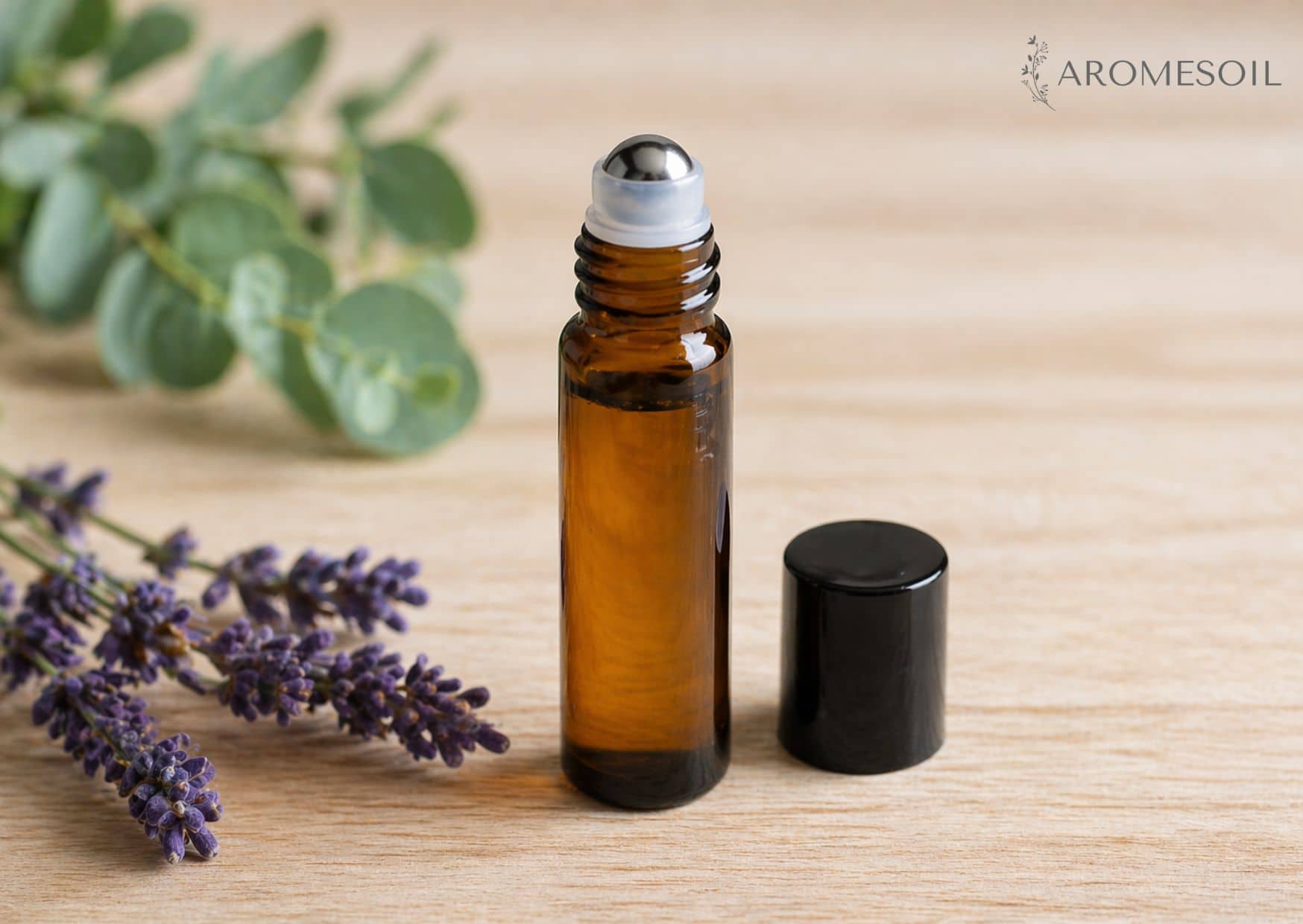
Creating your own essential oil rollers is a simple and customizable way to enjoy aromatic blends in your daily routine.
This guide explains how to make essential oil rollers safely and effectively, while following general cosmetic safety practices and avoiding any unverified health claims.
What you need to make an essential oil roller
- Essential oils
Choose high-quality essential oils from reputable sources. Each oil has its own aroma profile, so select based on your personal preference (e.g., floral, citrus, woody).
Note: Essential oils are highly concentrated and should always be handled carefully.
- Carrier oil
Carrier oils dilute essential oils, making them safer for topical application. Common options include jojoba, sweet almond, and grapeseed oil, and you can mix carrier oils to adjust the texture, absorption, and overall skin feel of your blend.
- Roller Bottle and Basic Tools
- Glass roller bottles (5 ml, 10 ml, or 15 ml)
- Dropper or pipette
- Funnel (optional)
- Labels for identification
How to make essential oil roller step by step
- Choose the Purpose of Your Roller Blend
Decide what type of aroma you want—relaxing, refreshing, or uplifting. This helps guide your oil selection.
- Add the Essential Oils
Place the desired number of drops into the empty roller bottle based on your dilution level (see guide below).
- Fill the Bottle with Carrier Oil
Slowly fill the rest of the bottle with your chosen carrier oil, leaving a small gap at the top.
- Insert the Roller Top and Shake Gently
Secure the roller cap tightly and gently shake to combine the oils.
Essential oil roller dilution guide
Dilution is important for safe topical use. A common range for general adult use is 1% to 3% dilution.
How many drops to use in a 5 ml roller bottle
- 1% dilution: ~1 drop
- 2% dilution: ~2 drops
- 3% dilution: ~3 drops
How many drops to use in a 10 ml roller bottle
- 1% dilution: ~2 drops
- 2% dilution: ~4 drops
- 3% dilution: ~6 drops
How many drops to use in a 15 ml roller bottle
- 1% dilution: ~3 drops
- 2% dilution: ~6 drops
- 3% dilution: ~9 drops
Best carrier oils for roll-on essential oils
Jojoba oil
Jojoba Oil is a lightweight and stable, closely resembles skin’s natural oils.
Sweet Almond Oil
Sweet Almond Oil is a mild and nourishing, suitable for most skin types.
Grapeseed Oil
Grapeseed Oil is a fast-absorbing and lightweight, often preferred for non-greasy blends.
Common mistakes when making essential oil rollers
Using undiluted essential oils directly on the skin
- Adding too many drops, leading to overly strong blends
- Not labeling blends properly
- Using low-quality or expired oils
Safety tips for using essential oil oll-Ons
- Avoid contact with eyes and sensitive areas
- Keep out of reach of children and pets
- Use only as directed for external application
- Consult a qualified professional if you have specific concerns
Why dilution matters
Patch Testing Before Use
Apply a small amount to a patch of skin and wait 24 hours to check for irritation.
Storage and Shelf Life Basics
Store in a cool, dark place. Most blends last 6–12 months, depending on the carrier oil used.
FAQs
Can you use essential oils in a roller bottle without dilution?
It is generally not recommended. Undiluted essential oils may increase the risk of skin irritation or sensitivity.
How long do DIY essential oil rollers last?
Typically between 6 and 12 months, depending on ingredients and storage conditions.
What is the best carrier oil for roller blends?
Jojoba oil is often preferred due to its stability, but the best option depends on personal preference and skin type.
Need a reliable bulk essential oil supplier for roller products?
When sourcing essential oils for personal projects, commercial roller blends, or Essential oil bulk orders, working with a trusted supplier is essential to ensure consistency, quality, and compliance with industry standards.
At Aromesoil, we position ourselves as a dependable bulk essential oil provider focused on transparency and responsible sourcing. Our approach is designed to support both small-scale creators and growing brands looking for reliable supply solutions.