Tea tree oil benefits are closely linked to skin care, scalp freshness, aromatherapy and professional formulations.
Its scent is fresh, herbal, clean and slightly camphoraceous, which makes it easy to recognise in personal care and home care products.
To use it well, it is important to understand what it can be used for, how to dilute it and which safety precautions matter most.
This guide explores the most common essential oils tea tree oil uses, with a practical focus on product development, safety, formulation and sourcing.
What is tea tree oil and why is it so widely used?
Tea tree oil is an essential oil obtained by steam distillation from the leaves of Melaleuca alternifolia, a plant native to Australia.
With its sharp green freshness and clean herbal edge, tea tree oil fits naturally into personal care, aromatherapy, home fragrance and cleaning-inspired formulations.
NCCIH as the Latin name for tea tree oil and notes that most production is associated with Australia, although other regions also produce it commercially.
It is not a soft or sweet oil.
Its popularity comes from a practical mix of qualities:
- A clean aromatic profile.
- Versatile formulation uses and a long-standing reputation in topical products.
You can find it in facial cleansers, scalp products, soaps, deodorizing blends, room sprays and cleaning-inspired formulas.
For brands and formulators, tea tree oil also blends well with essential oils for professional formulations such as eucalyptus, rosemary, lemon, lavender and peppermint.
What is tea tree oil good for?
In most formulas, tea tree oil is valued for its fresh herbal scent, its clean impression and the way it fits into skincare, haircare, aromatherapy, air care and cleaning-inspired products.
It is commonly used in:
For skin
In skincare, tea tree oil is often used in products made for oily, combination or blemish-prone skin routines. It may appear in facial cleansers, soaps, masks, toners and cosmetic spot-care products.
Rather than presenting it as a treatment, it is more accurate to describe tea tree oil as a cosmetic and aromatic ingredient commonly included in formulas for oily or blemish-prone skin.
It can also make a product feel fresher. In a face wash, for example, tea tree oil can give the formula a clean botanical scent without making the fragrance feel heavy.
Research has explored tea tree oil in acne-prone skin, including studies using 5% tea tree oil preparations. However, this should be treated as background information, not as a reason to present tea tree oil as an acne treatment.
For product content, the safest approach is to focus on fresh-feeling skincare, cosmetic use and proper dilution, not on medical promises.
For hair and scalp
In haircare, tea tree oil is often used in shampoos, scalp cleansers, hair masks and rinse-off products made for fresh, clean-feeling routines.
Its herbal, camphoraceous scent works especially well in formulas for oily scalp routines and refreshing shower products. In a shampoo or scalp scrub, it can add a clean botanical aroma without making the fragrance feel heavy.
A clinical study evaluated a 5% tea tree oil shampoo in dandruff care, which makes this ingredient especially relevant for formulated scalp products.
For product content, the safest angle is to focus on fresh-feeling scalp care, cleansing routines and botanical haircare formulas.
For aromatherapy
Tea tree oil is also valued in aromatherapy for its fresh, herbal and clean scent. It is often used in diffuser blends, room sprays, massage oils and spa-inspired formulas where the goal is to create a crisp botanical atmosphere.
Its aroma blends well with lavender, eucalyptus, lemon, rosemary, peppermint and pine. In a blend, tea tree oil can add a sharper, cleaner note that makes the final product feel more refreshing.
NCCIH includes tea tree among the essential oils used in aromatherapy and explains that aromatherapy usually involves inhaling essential oils or applying them to the skin in diluted form.
For brands working on home fragrance, tea tree can support diffuser blends with essential oils that feel practical, fresh and easy to recognise.
How to use Tea Tree oil safely
Tea tree oil should be used with care because it is very concentrated. The safest approach is simple: dilute it, patch test it, avoid sensitive areas and never swallow it.
The right use also depends on the type of product. A dilution suitable for a rinse-off body wash may not be suitable for a leave-on facial product. Formula type, skin area, concentration and user sensitivity all matter.
Dilution basics for topical use
For topical use, tea tree oil should usually be diluted in a suitable base before touching the skin. In cosmetics, that base may be a cream, gel, cleanser, shampoo or oil blend.
When preparing simple topical blends, carrier oils such as jojoba, almond or grape seed oil can help disperse the essential oil and make application more comfortable.
This does not remove the need for caution. Facial products generally require a more conservative dilution than body products or rinse-off formulas. Sensitive skin, damaged skin and children’s products need even greater care.
How to patch test before first use
Before using a tea tree oil product on a larger area, a patch test is a useful first step, especially for leave-on skincare, scalp products or massage blends.
Apply a small amount of the finished diluted product to a small area of clean, dry skin, such as the inner arm. Leave it on as the product is intended to be used, then check the area over the next day.
Signs such as redness, itching, burning, stinging, dryness or discomfort may indicate that the product is not a good fit for that person.
NCCIH notes that topical tea tree products may cause redness or irritation in some people, and that this may be more likely when the product is old or has been exposed to heat, light or air.
How often to use tea tree oil in skin and scalp routines
Frequency depends on the product. A rinse-off cleanser with tea tree oil can fit into a routine differently than a leave-on facial blend or a scalp treatment.
For skin, it is better to start slowly and avoid layering several tea tree products at the same time. For scalp care, shampoos and rinse-off products are usually easier to manage than direct oil applications.
If the skin becomes tight, dry, red or uncomfortable, reduce use or stop. With essential oils, using more does not usually mean getting better results.
Why tea tree oil should never be swallowed
Tea tree oil should never be swallowed. This is one of the most important safety points of the whole article.
NCCIH states that taking tea tree oil orally can cause serious symptoms such as confusion, unsteadiness, inability to walk and coma. Mayo Clinic also warns that tea tree oil can be toxic when swallowed.
Tea tree oil is for external, aromatic or professionally formulated applications only. It should also be kept away from the eyes, mucous membranes and children.
Professional applications of Tea Tree oil
Beyond personal care, tea tree oil has a clear place in professional formulation. Its aromatic profile, versatility and strong clean association make it useful across several product categories.
For manufacturers, the value is not only in the list of tea tree essential oil benefits, but in how the oil behaves inside a finished formula.
In perfumery
In perfumery, tea tree oil is usually not used as a romantic or luxurious note. Its strength lies in its functional freshness.
It brings a medicinal, herbal, green and slightly camphoraceous tone. This can be useful in natural perfumery, wellness-inspired products, spa concepts, masculine fresh accords and blends designed to smell clean and practical.
Used carefully, tea tree oil can sharpen a formula. Used too heavily, it can dominate the fragrance and make it feel too medicinal.
In air care and home fragrance
Tea tree oil works well in air care concepts where freshness and cleanliness are part of the desired impression. It can be used in room sprays, diffuser blends, closet fresheners and aromatic home products.
For room spray formulations, it is often more effective when blended with brighter or softer oils. Lemon can add lift, eucalyptus can reinforce freshness and lavender can smooth its sharper edges.
Some studies have explored tea tree oil in disinfectant-related or environmental contexts. For finished products, these findings should be handled carefully and not turned into unsupported consumer claims. Search results for the 2022 study describe tea tree oil as being investigated for potential disinfectant activity against coronavirus models.
In detergency and cleaning products
Tea tree oil is a natural fit for detergency because its aroma communicates cleanliness, freshness and odor control. It can be considered for surface cleaners, laundry concepts, multipurpose sprays and freshening products.
In laundry care, tea tree is often associated with odor-prone textiles such as gym clothes, socks or towels. Aromes Oil also discusses tea tree among essential oils used for laundry freshness.
For brands developing fragrance oils for laundry products, tea tree can work as a functional aromatic note within a broader fragrance direction.
In cosmetics and personal care formulations
Tea tree oil appears in many personal care formats: facial cleansers, body washes, deodorants, shampoos, soaps, clay masks and scalp products.
Its use requires formulation discipline. Concentration, solubilization, packaging, oxidation control and compatibility with the base all influence the final result.
A 2023 study on tea tree oil microencapsulation focused on antimicrobial activity and microcapsules designed to improve some functional properties of the oil. The study also highlights professional concerns such as analytical quality confirmation and formulation performance.
For brands creating essential oils for soap making, tea tree can bring a clean herbal profile that fits well in cleansing bars, shower products and fresh personal care lines.
How to choose a good Tea Tree oil
A good tea tree oil should be selected with the same care as any professional raw material. For cosmetic, aromatherapy or home care formulations, look for:
- Botanical name: the oil should be clearly identified as Melaleuca alternifolia.
- Origin and sourcing information: useful for traceability and quality control.
- Batch details: especially important for brands working with repeat production.
- Technical documentation: such as Safety Data Sheets, Technical Data Sheets and allergen information.
- Proper storage conditions: tea tree oil should be protected from heat, light and air to help reduce oxidation.
- Suitable packaging: dark glass or professional containers help preserve the oil’s quality.
- Clear application guidance: the supplier should indicate whether the oil is suitable for cosmetics, aromatherapy, soap making or home care products.
Quality also matters because tea tree oil can oxidize when exposed to air, heat or light, which may increase irritation risk in some users. NCCIH notes that topical reactions may be more likely with products that are old or poorly stored.
For professional use, documentation and traceability are especially important. Aromes Oil’s organic tea tree essential oil page identifies the oil as Melaleuca alternifolia and presents it for personal care, aromatherapy and home solutions.
If your brand works with certified botanical ingredients, it may also make sense to explore organic oils for ranges where sourcing, certification and positioning are part of the product value.
Looking to source premium Tea Tree oil in bulk?
At Aromesoil, we work with brands, laboratories and manufacturers that need essential oils for professional formulation, product development and bulk supply.
Our range of organic essential oils in bulk are designed for companies looking for botanical ingredients with clear sourcing, technical documentation and reliable supply options.
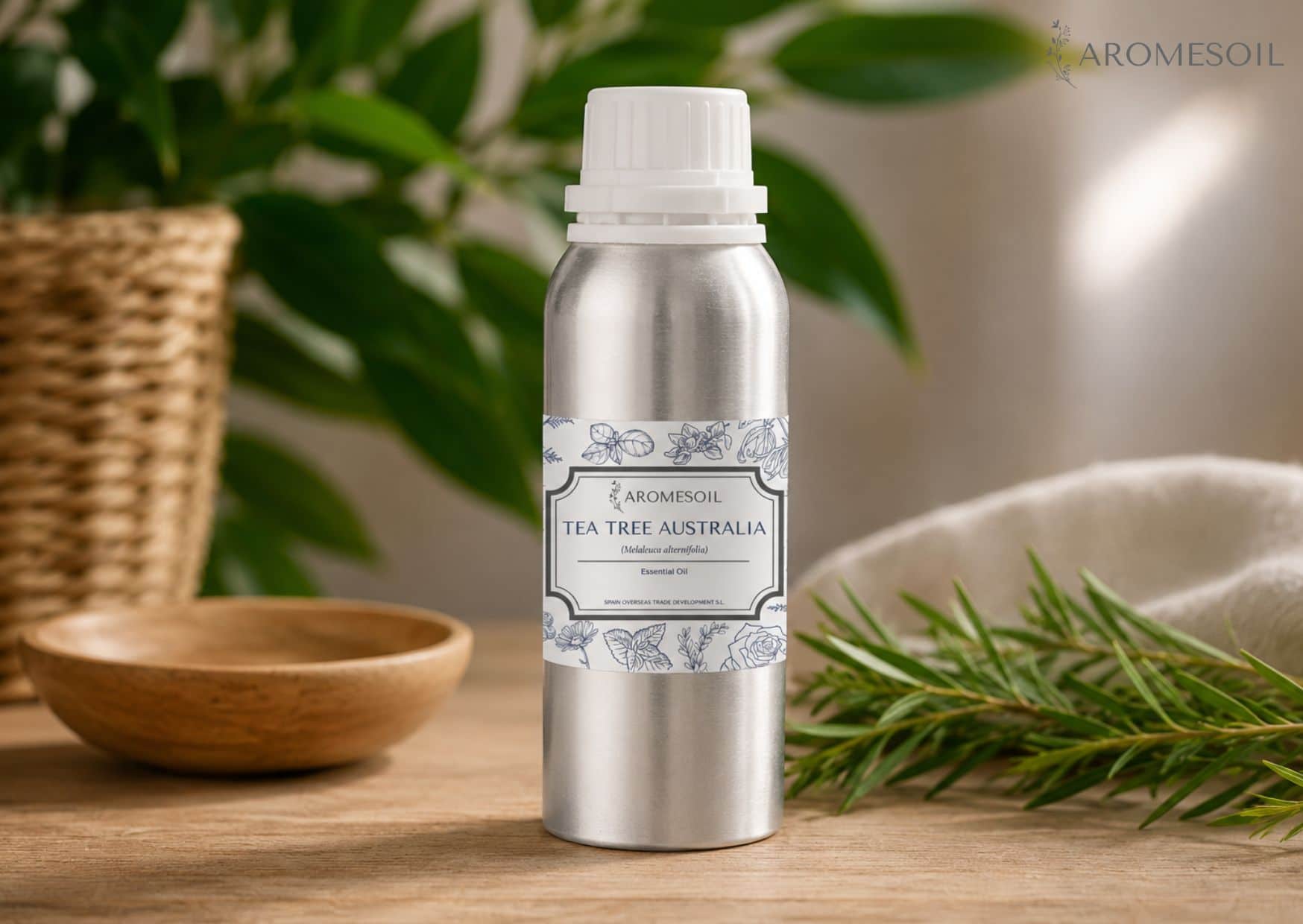
Within this range, our organic tea tree essential oil is identified as Melaleuca alternifolia and is suitable for applications such as personal care, aromatherapy, home fragrance and cleaning-inspired formulations.
For projects that need a fresh, herbal and clean aromatic profile, tea tree oil can be a practical choice in scalp care, soaps, room sprays, laundry concepts and cosmetic formulations when used responsibly and properly diluted.
Bibliography
1.
Satchell AC, Saurajen A, Bell C, Barnetson RStC. Treatment of dandruff with 5% tea tree oil shampoo. Journal of the American Academy of Dermatology. 2002;47(6):852-855. doi:10.1067/mjd.2002.122734
2.
Manzanelli FA, Ravetti S, Brignone SG, et al. Enhancing the Functional Properties of Tea Tree Oil: In Vitro Antimicrobial Activity and Microencapsulation Strategy. Pharmaceutics. 2023;15(10):2489. doi:10.3390/pharmaceutics15102489
3.
Li Z, Shao X, Wei Y, et al. Transcriptome analysis of Botrytis cinerea in response to tea tree oil and its two characteristic components. Applied Microbiology and Biotechnology. 2020;104(5):2163-2178. doi:10.1007/s00253-020-10382-9
4.
Ahmad S, Afsana ,, Popli H. A review on efficacy and tolerability of tea tree oil for acne. Journal of Drug Delivery and Therapeutics. 2019;9(3):609-612. doi:10.22270/jddt.v9i3.2838
5.
Romeo A, Iacovelli F, Scagnolari C, et al. Potential Use of Tea Tree Oil as a Disinfectant Agent against Coronaviruses: A Combined Experimental and Simulation Study. Molecules. 2022;27(12):3786. doi:10.3390/molecules27123786